Home | Looking for something? Sign In | New here? Sign Up | Log out

China Mining Equipment Factory


China Supplier of Mining Equipment
Jiangxi Gandong Mining Equipment 

Machinery Manufacturer specialized in the production of mining machinery specialized equipment: Shaking table, yunxi shaking table, laboratory shaking tables, spiral separato, separated coal jig, saw-tooth wave ladder jig, waterpower cyclone separator, SF-floatation machine, XJK flotation machine, magnetic separator.


Professional Supplier of Mining Equipment
Shanghai Firstmining Machinery
Professional Supplier of Mining Equipment
Our company is specialized in supplying and exporting of all kinds of manufacturing & processing machinery products including crusher, mill and mining equipment which have many years experience in this field. We sincerely want to supply you with high quality products and perfect service based on our most efficient management and professional work teams.
Shanghai Firstmining Machinery Co., Ltd. [Province:Shanghai, China] 

Leading Manufacturer of Mining Equipment
Shanghai Leiyou Complete Machinery
Shanghai Leiyou Complete Machinery Co., Ltd., is one high-technology, modern enterprise that professionally engaged in the R&D and manufacturing the complete set of crushing&screening equipment and industrial mill machinery. At present, our equipments have been exported to many countries and regions such as South-Asia, Mideast, Africa, Europe etc and highly appreciated by our customers.

Plate Feeder
Global Industrial Components International Trading
Apron Plate is uniquely wear resistant plate adopting double round congruent structure in home market. It can effectively solve some problems of high weight, short life etc.


Professional Stone Jaw Crusher
Shanghai Leiyou Complete Machinery Co
 It is widely used in quarry, mining, construction, road building, highway and railway construction, metallurgy and so on. 2. Features and Values High reliability Both casting and welded frame construction

Shanghai LY Vibrating Feeder ZSW-380*96 
As a necessary equipment, it can effectively control the feeding capacity to match with the capacity of the whole crushing plant. It features strong construction, anti-strike and wearable. Working...
Shanghai Longyang Machinery Factory [Province:Shanghai, China]

The PF Series Hard Rock Impact Crusher Machinery
Impact Crusher, Jaw Crusher, Hard Rock Impact Crusher, Vertical Impact Crusher, Mining Crushing Equipment, ...PF series impact crusher can be widely used in the field of mining, and stone used ...

DJ Steeply Inclined Belt Conveyor 
This machine is a continuously conveying equipment for loose bulk material such as coal, sand, stone, grain, etc and some powdered material,... when the mateial need to be conveyor at a big inclined angle. ...

Gears and Gear Shafts for Heavy Duty Construction and Mining Machinery 
Gear Shaft, gears and other power transmission parts - Construction and Mining Machinery Part ...* Sichuan Y&J Industries is ... parts of construction machinery and mining equipments. ...
Sichuan Y&J Industries Co., Ltd. [Province:Sichuan, China]

Cap Lamp (KL4LM(A)) 
Application Widely used as lighting fixture for safety, rescue, and relief in various mines, coal mine, oil field, chemical engineerings, highway transportation, and other inflammable and explosive ...
Shanxi Guangyu LED Lighting Co., Ltd. [Province:Beijing, China]

VSI Vertical Shaft Impact Crusher 
4, The equipment is capable of shaping out products. Products take a...5, During producing, stone materials can form a protective bottom to avoid wearing the equipment, so the equipment is durable in use.

ISO9001-2008 Jaw Crusher for 40 Years Experience 
Jaw crusher can crush ... is the first choice of primary crushing equipment. ...7)Energy-saving equipment: Stand-alone energy-saving 15% ~ 30%, the system energy-saving more than doubled

Spiral Chute (5LL-2000, 5LL-1500) 
Spirals are gravity concentrators and separate minerals of different specific gravity according to their relative movement in response to gravity, centrifugal force and other forces in the fluid ...

Ball Mill
Ball Mill grinds material by rotating a cylinder with steel grinding balls, causing the balls to fall back into the cylinder and onto the material to be ground. The rotation is usually between 4 to 20 ...

Coal Mining Equipment
Coal mining equipment, Gold mining equipment, mining machine, Mineral processing line ...The equipment of mineral processing cover feeder, crusher, ball mill, classifier,... flotation machine and so on. ...


read more

China's industry continues rapid growth

Slowdown in industrial growth is reasonable
China Industrial growth
 

The growth rate of the industrial added value of Chinese enterprises above the designated size (enterprises with annual sales of more than 20 million yuan) in the first quarter of 2011 was 5.2 percentage points lower than that of the same period of last year. The rate in April was 1.4 percentage points lower than that of March. The Chinese economy has entered a period of steady growth after recovering quickly from the global financial crisis with the help of a stimulus plan. A slowdown in industrial growth is an inevitable result of the ongoing industrial restructuring. Furthermore, there are also some other reasons behind the slowdown.

First, enterprises above the designated size witnessed rapid and considerable growth in industrial added value last year, which was a high base of comparison.

Second, the slow global economic recovery is facing increasing uncertainty. Japan's earthquake, tsunami and nuclear crisis have produced direct and indirect effects on the supply of key components in the automotive, electronics and other industries, and have affected China's industrial output to a certain degree.

Third, some industries are faced with the increasingly serious problem of overcapacity. Due to the central government's strict real estate control measures, domestic consumption dropped for items such as household appliances, furniture and building materials, which are closely related to the property industry, and some preferential policies and subsidy plans for auto purchases were terminated. As a result, the domestic demand for certain industrial products declined, and the steel, building materials, automobile, and some other industries are facing growing pressure from overcapacity, which affected the country's industrial growth to some extent.

Fourth, rising costs of factors of production and the global surge in the prices of energy and raw materials have placed domestic industrial enterprises under considerable pressure and caused certain industries to grow slower. Due to the imported inflation pressure and high inflation expectations, Chinese currency authorities have tightened up the monetary policy and imposed strict controls on bank loans. As a result, many enterprises, especially small and medium-sized enterprises, are suffering from capital shortages. In addition, the imbalance between energy supply and demand has become more serious because of the rapid development of high-energy-consumption industries.

Increasing pressure on industrial restructuring

2011 is the first year of the 12th Five-Year Plan. The industrial economy is facing the dual tasks of maintaining steady and rapid economic growth and accelerating structural adjustment. Judging from the current industrial economic situation, the overall industrial production growth is stable, while the demand growth is slowing down, causing the accelerated growth of industrial product inventory and overcapacity as well as increasing pressure. Therefore, the government must intensify structural adjustment to promote industrial restructuring and upgrading.

Promoting industrial restructuring requires related departments to accelerate the elimination of backwards production capacity, strengthen the technical transformation of enterprises, accelerate the development of strategic emerging industries, strengthen the energy conservation work and actively expand the international market.

China to maintain stable and rapid industrial growth in 2011

Rapid industrial growth is very important for ensuring and increasing supply, expanding employment and maintaining stable and rapid economic development. The steady and rapid industrial economic development in China enjoys many favorable conditions.

Investments will maintain rapid growth to actively and steadily promote urbanization, expand the scale of affordable housing construction and encourage the expansion of private investments. In regard to consumption, the Chinese government implemented a strategy of expanding domestic demand and has made expanding consumer demand a strategic priority to increase the income distribution system reform.

The rapid income growth will create conditions for expanding consumer demand. In regard to the international market, the global economy continues to recover along with the gradual weakening of the impact from international emergencies, which will drive rapid growth in exports. Meanwhile, it is expected that the effects of price changes will gradually weaken in the second half of 2011, which will also help ease inflationary pressure. All these factors are conducive to improving the environment for industrial development and promoting the stable and rapid industrial economic development, thus to create more favorable conditions for the stable and rapid economic development throughout the year.

The article is written by Wang Yiming, deputy director of the Academy of Macroeconomic Research under the National Development and Reform Commission, and is translated by People's Daily Online.

read more

Beijing Software Industry Productivity Center

Beijing Software Industry Productivity Center as the non-profit Organization set up by Beijing Municipal Government for the purpose of promoting software industry development. It shoulders the responsibilities for management system integration, strategic planning research, policy implementation coordination, government investment planning, etc.

It is the complementary body to assist Beijing Municipality for decision making and one of the authoritative organizations dedicated to the software industry with nationwide impact. More that 2000 companies have registered with us. BSIPC has established close cooperation and partnership with organizations in America, Japan, France, Canada, Australia, etc. and has helped many multi-nationals to invest in Beijing.

Contact: Rongrong Guan
12/F Baiyan Building, No. 238
Beisihuan Zhong Road,
Hai Dian District
Beijing, CN 100083
Phone: (86) 10-8233-1717-818
Email: Guanrr@bsw.gov.cn 

read more

China Now Has Third Highest Labor Costs in Emerging Asia

An average worker in China costs more than the average worker in any other emerging Asian economy, save Malaysia and Thailand, when considered in terms of combined salary and welfare payments, China Briefing has found.
Conducting a review of minimum labor costs, determined by the legal minimum amount stipulated in 15 different countries, and added together with the pertinent mandatory welfare payments due, it is apparent that since the introduction of the revised labor law in 2008, China’s workers are now amongst some of the best paid in Asia.
The survey, conducted in-house, took samples of minimum wage levels from each of China’s provinces and 40 cities, and based its figures on the mean average. China’s minimum wage varies both on a provincial and an urban basis. This was then compared with similar data from other Asian countries. The results look like this:

However, it is expected that China’s next five year plan will see mechanisms put in place to double the country’s minimum wage by 2015. That will raise the Chinese figure to $3,000 plus welfare of 50 percent, assuming the latter payments remain the same. This provides a total minimum salary overhead of $4,500. In reality, most salaries will be far higher. That will make China’s average labor cost second only to Malaysia and significantly more expensive than any other Asian country.
This represents mixed fortunes for foreign investors in China. It signals that an exodus of export driven manufacturing may occur, principally to competing, lower-cost Asian nations for China’s residual export driven manufacturing.
According to figures released by China customs, the country’s export manufacturing trade reached US$1.58 trillion in 2010. It is to be expected that a significant percentage of this will relocate elsewhere purely to maintain economic viability for export manufacturers. While that is a huge amount China stands to lose, if it can genuinely develop a sustainable domestic consumer market, then the impact of losing this amount may be lessened by the impact of a greater collection of domestic taxes, both in VAT and profits taxes. However, that is a balancing act the government needs to get right if they are not to be left with a huge fiscal income gap.
The good news is that such salary increases should manifest themselves into a massive rise in Chinese consumerism as significant wealth and disposable income is created. This follows on from plans revealed last year by several large scale manufacturers such as Bayer and Adidas, both of whom signaled their intentions to increase sales in China’s domestic markets by establishing additional manufacturing units in several inland cities. Growth for them, it appears, would be coming from new wealth being created inland and elsewhere within China’s own emerging markets.
The scale of movement of the China demographics as concerns its working population is undervalued. Businesses involved in China must now start to take these figures into consideration for their businesses, or face either losing a burgeoning domestic market, or failing to adapt to lower pricing from competitors who have relocated elsewhere in Asia. Low prices for cheap commodities such as computers, toys, and other mass produced items will remain the driver for markets in the United States and European Union, meaning export driven  manufacturers must begin to look at emerging Asia to ascertain which country is suitable for housing facilities for such demand.

read more

Why China is Good for America

The words “Made in China” have become ubiquitous on clothing labels and electronic devices. Are these same three words proof, too, of an enormous loss of American jobs to the Chinese labor force? Or are they evidence greater still, of U.S. dependency on China?

Much of the debate surrounding the U.S.-China relationship has accused China of depleting employment in America. But the same time, it is crucial to consider other less-championed viewpoints. For example, how many jobs has China created for the United States? How dependent is the American economy truly on China?
Probably much more so than one would think.
With the People’s Republic of China funneling upwards of a billion U.S. dollars into the States everyday, the existing trade surplus of US$1.4 trillion and rising reveals an enormous economic imbalance, a gap that shows no sign of receding with the continual Chinese purchase of U.S. Treasury bonds.
As James Fallows illustrated earlier this year in The Atlantic, every American has borrowed approximately US$4000 from somebody in China. When put this way, it’s easy to understand how China has funded the American lifestyle, providing the US government the money to spend considerably more than it could otherwise afford. Another way to look at it: the Chinese people are not living as well as they could be. With China’s savings rate at an astounding 50 percent, most of it goes towards savings in the form of U.S. Treasury notes.
What happens is a default procedure circulating U.S. dollars that go into China back out and into the American money supply. As Fallows described, after a factory or company in China trades its incoming dollars for RMB at its local bank, that bank must submit the foreign currency to the People’s Bank of China – think the Chinese version of the U.S. Federal Reserve system. The PBOC is also ordained to pass the money along as well, to the State Administration for Foreign Exchange. For the most part, SAFE decides that the dollars will get the most return as investment in U.S. Treasury bonds which is where they go and from where they can easily become incoming revenue for Chinese businesses again.
This flow of economic wealth characterizes China’s preferred path to growth. Why has the country adopted such operations? The answer involves an acutely cautious course of action designed to propel intense economic development. In effect, the central government simultaneously wants to safeguard against aggravated tensions among its social classes, generate increased employment opportunities for its people, and prevent possibly ruinous hyperinflation of the Chinese yuan. Holding American reserves thus keeps these intentions alive while also protecting to a certain extent the dollar, which acts as the clasp that holds Beijing’s strategy in place.
As for how long China will adhere to this approach is of course, a hot topic of discussion and speculation. The country is in no hurry to abandon the dollar by any means. Although the United States in retrospect most likely would have preferred not to be in the position it is today—this dependent upon Chinese subsidies and burdened by such a large trade deficit—at this point, it makes the most sense for America to ponder the future.
The China market is as alluring as ever. Increasingly, U.S. companies see how that their profit-making potential in China is not only growing but also greater than it is in America. At the same time, gaining access to Chinese markets, which used to be a top challenge for American firms interested in doing business in China, has become much easier.
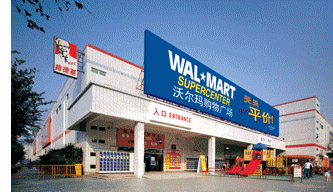
Restrictions have loosened on Beijing’s end, and U.S. companies are finding less and less reason not to enter the Chinese market. The world’s largest private employer, Wal-Mart Stores Inc., is a prime example. It has been utilizing the advantages China can provide for buying from China for quite some time. According to the consumer watchdog Wal-Mart Watch, the chain obtains approximately 80 percent of its supply from China. With its “everyday low price” motto, the American public corporation owns a global phenomenon of over 6,000 retail outlets worldwide.
Although its profits in China comprise a small percentage of its total earnings, Wal-Mart nevertheless is aggressively expanding on the mainland as it looks to capitalize on a rapidly growing Chinese middle class. Beijing, too, has made it easier for expanded operations by foreign retailers since Wal-Mart moved into China in 1996.
In December 2007, Wal-Mart announced plans to open its 100th store in China, continuing its national development rate of more than 30 percent annually. For the most part, its success has been embraced as a grand gain for both the United States and China. As Carlos M. Gutierrez, the U.S. commerce secretary said, “Wal-Mart’s expansion benefits millions of US shareholders, creates valuable jobs in the United States and creates new jobs for Chinese.”
Wal-Mart’s ability to keep prices low has helped keep it going strong even in the midst of a slowing American economy. Pravda reported that price-conscious American shoppers flocking to the chain have helped it take back some of its market share from Target Corp.
As such, China appears to be an increasingly enticing playground for American enterprise. The realm of outsourcing also speaks to the growing interest. As reported by BDO Seidman’s 2008 Technology Outlook Survey, while the most common location currently for outsourcing is India followed by Southeast Asia, a U.S. technology companies have indicated that China could very well surpass Southeast Asia in the future.
China is still one of today’s most appealing outsourcing opportunities. A well-functioning national infrastructure coupled with a stable government provides a solid base for foreign-owned business. In addition, the large labor force with an emerging order of western-educated leaders can help ease the transition of multinationals into the Chinese market, as do the numerous support industries that cater to any need or help desired.
Outsourcing is not a one-way street however, and many foreign corporations have transferred their operations into the United States. Whereas about 15 million jobs have been lost each year for the past 10 years or so, 17 million have been created each year, too, according to the National Center for Policy Analysis. A sizable portion of these jobs have come from foreign companies setting up business in the United States.
Two examples from China which have done so are Haier, an appliance manufacturer, and Lenovo, the computer manufacturer. Besides branding, management, and other potentially expected benefits, the weakening dollar and America’s status as one of the world’s largest consumers have made it more attractive to foreign companies.
Most recently, U.S. Treasury Secretary Henry M. Paulson, Jr. has said that he would pressure the Chinese to open their economy up even more with regard to “the concerns of American companies that China’s investment regulations are opaque and seem in many ways to be designed to favor China’s ‘national champions.’” Paulson suggests that U.S. competition is being shut out to a certain extent.
But America need not fear Chinese practices. The RMB has steadily appreciated—almost 20 percent since its revaluation in July 2005. Consequently, the degree to which exports to China have increased has surpassed the rate at which imports from China have risen, and the U.S. trade deficit is on the decline from its all-time high of US $256.2 billion last year.
Fallows argues that, in various ways, China as the world’s emerging superpower should not be as threatening as it has been publicized to be. The country is unquestionably transforming itself and in the process strengthening itself but it is doing so by building off of its global connections. For China to bring about the downfall of any other state, and especially that of the United States., would be a case of post-Cold-War mutual assured destruction.
If anything, America should worry about a China in this century that proves unable to sustain its rapid expansion or worse, suffers a breakdown for therein, lies the greatest threat of all and for all parties involved.

read more

Beer Companyt List in China


China Resources Snow Breweries
China
http://www.snowbeer....
Revenues (2010): US$2.6 billion
Beer Manufacturer

Largest beer manufacturer in China with market share of 20% (2008:18%) in 2009. The company operates 72 breweries in domestic market. The company is publicly listed on Hongkong Stock Exchange with parent corporation China Resources National Corporation controlling 51.5% of equity (2010). In 2009, volume sales stood at 8.3 billion with core brand "Snow" accounting for 87% of total.


Tsingtao Brewery
China
http://www.tsingtaob...
Revenues (2010): US$2.7 billion
Beer Manufacturer

Second leading beer manufacturer in China with market share of 14% (2008:14%) in 2009. The company enhanced its production capacity to 7.7 billion litres. It is publicly listed on Shanghai Stock Exchange with core beer brand "Tsingtao" controlling 6.1% market share (2009). The company was established in 1903.

Anheuser-Busch InBev China Co
Belgium
http://www.ab-inbev....
Revenues (2010): US$1.8 billion
Beer Manufacturer

Third largest beer manufacturer in China with market share of 12% (2008:14%) in 2009. The company has beer volume sales of 4.8 billion litres, with breweries portfolio of 33 in domestic market (2008-2009). It ventured into China in 1984. Harbin is the core beer brand with market share of 4.7%.

Chongqing Brewery
China
http://n.a...
Revenues (2010): US$0.35 billion
Beer Manufacturer

Seventh largest beer manufacturer in China with market share of 2% (2008: 2%) in 2009. The company is publicly traded on Shanghai Stock Exchange with market capitalisation of US$4.4 billion. In 2010, Carlsberg enhanced equity to 29.7% in 2010.

Yanjing Brewery
China
http://www.yanjing.c...
Revenues (2010): US$1.4 billion
Beer Manufacturer

Fourth biggest beer manufacturer in China with market share of 11% (2008:10%) in 2009. It is publicly listed on Shenzhen Stock Exchange with market capitalisation of US$3.45 billion (2010). It's flagship beer brand "Yanjing" control 5.2% market share (2009). The company was established in 1980.

Guangzhou Zhujiang Brewery
China
http://www.zhujiangb...
Revenues (2010): US$0.4 billion
Beer Manufacturer

One of the leading beer manufacturer in China with market share of 3% (2008:3%) in 2009. It has production capacity of 15 million hectalitre. Anheuser-Bush InBev controls 24% of equity in 2010. The company as established in 1985.

Kingway Brewery
Hong Kong
http://www.kingwaybe...
Revenues (2010): US$0.2 billion
Beer Manufacturer

One of the fastest growing beer manufacturer in China with market share of 2% (2008: 2%) in 2009. It is publicly listed on HongKong Stock Exchange with annual production capacity of 0.2 million tonnes. Heineken-APB (China) Pte Ltd controls 21% of equity (December 2010).

FuJian Yanjing HuiQuan Brewery
China
http://www.huiquan-b...
Revenues (2010): US$0.18 billion
Beer Manufacturer

One of the leading beer manufacturer in China with strong market penetration in Fujian Province. The company has four production facilities with annual capacity of 0.5 million tonnes (2009). Hongkong and Taiwan are core export markets. It is listed on Shanghai Stock Exchange with market capitalisation of US$0.3 billion (December 2010).

Jinxing Beer Group Co
China
http://n.a...
n.a
Beer Manufacturer

Fifth leading beer manufacturer in China with market share of 4% (2008:4%) in 2009. It has production capacity of 0.25 million tonnes. The company was incorporated in 1995.Core and non core beer brands are marketed and distributed in 20 provinces across China.

Jiangsu Yanghe Brewery
China
http://www.chinayang...
Revenues (2010): US$0.6 billion
Beer Manufacturer

One of the fastest growing beer manufacturer in China with strong market presence in liquor and wine domestic marketspace. The company is fourth largest wine distributor in China. It is publicly listed on Shanghai Stock Exchange with market capitalisation of US$16.5 billion in December 2010.

San Miguel Corporation
Philippines
http://www.sanmiguel...
Revenues (2010): US$5 billion
Beer Manufacturer

Niche beer manufacturer and distributor in China with production facility portfolio of 3 in 2010. The parent corporation is listed on Philippine Stock Exchange. It ventured into Chinese beer manufacturing market in 1991.

Beijing Beer Asahi Breweries
Japan
http://www.asahibeer...
n.a
Beer Manufacturer

One of the leading beer manufacturer in Beijing ventured into domestic market in 2003. The parent corporation Asahi Breweries control 55% of equity in December 2010. The company offers Beijing beer brand in collabration with Tingyi Holding Corporation in China.

Hangzhou Qiandaohu Beer Co
China
http://www.qdhbeer.c...
n.a
Beer Manufacturer

Niche beer supplier in Qiandaohu. Kirin Brewery Co has minority stake (25%) in the enterprise purchase for US$38 million in December 2006. The core beer brand is Cheerday.

Jinan Beer Group
China
http://www.jnbeer.co...
n.a
Beer Manufacturer

Largest beer provider in Jinan province with market share of 30% in 2009. It is wholly owned subsidiary of Tsingtao Brewery acquired for US$37.5 million on June 2009. "Baotu Spring" is the flagship beer brand of the enterprise.

Liaoning Tianhu Beer
China
http://n.a...
n.a
Beer Manufacturer

One of the oldest beer manufacturer and distributor in Fushun marketspace incorporated in 2004. Tianhu is the core beer brand.

read more

BEER MANUFACTURING IN CHINA

Global beer production stood at 181 billion liters with a year-on-year growth of 0.4% in 2009 with the five largest beer manufacturing nations constituting 52% ofthe  total market. China is the largest producer accounting for 23.7% of total market followed by the United States with annual production volume of 23 billion.   


China is the world's largest beer producer with manufacturing volume of 43 billion liters annually, and CAGR of 8.1% (2004-2009). The growth of domestic beer production in China is attributed to improving per capita consumption to 32.1 liters and exponential population growth to 1.35 billion over the past 2-3 years. Domestic beer production  witnessed lower than expected growth in 2008 and 2009 predominantly due to the Sichuan earthquake and severe winter conditions. 

Hop is the core raw material used for brewing beer worldwide. Among the 60 hop farms across China, Xinjiang is the largest hop farming area constituting 60% of total farms in China. Gansu is the second largest region accounting for 40% of hops farming. In China, hop plantation surface has increased to 6,023 hectares, with year-on-year growth of 6%.

China beer manufacturing segment is moderately consolidated with the ten largest brands controlling 48.9% of market share. China Resources Enterprises Co Ltd's core brand "Snow" is the leading brand with a volume share of 17% followed by Tsingtao Brewery Co Ltd's flagship brand "Tsingtao". Harbin beer brand is the fastest growing in domestic marketspace with a volume share of 4.7%.


Majority of international and domestic beer manufacturers in China are growing fast via acquisitions, regional advertising campaigns, improving production capabilities and new distribution channels

China beer manufacturing is regionally fragmented with local producers controlling niche markets. National beer manufacturers (Tsingtao Brewery and AB Inbev) have enhanced regional promotional and advertising expenditure to compete with small regional and local brands. In 2010, a few dominant beer manufacturers (Carlsberg, Molson, Tsingtao Brewery, etc) acquired local and regional small brewers to improve brand equity. Finally, fierce competition reduces profitability on a short term basis for beer manufacturers in China.
 
China is the largest beer producing nation attracting considerable foreign direct investment in the form of international brands acquisition and creation of joint venture agreements with local and regional brewers. Strong labou unions, local & regional government support to Chinese-born enterprises, need for costly equipment  and beer excise taxation increased to US$31.2 per ton from US$24.9 over the past 3-5 years might hamper foreign direct investment in beer manufacturing segment. 

Further, new entrants can improve their market positions via aggressive outdoor and point of sale display advertising campaigns in expat localities (Beijing, Shanghai, etc), entering into partnership with regional bartenders, enhancing on trade volume sales and developing the taste for beer products in urban and rural markets.

Sources: The Barth Report (2009/2010), Business Monitor International (2010), Brewing & Beverage Industry International, Anheuser-Busch InBev China Co., Ltd, China Resources Enterprise Investor Presentation (July 2010), www.haicent.com and www.fas.usda.gov.

read more

Understanding China's brewing industry

The International Brewing Conference 2010, a joint project of VLB Berlin, the China Alcoholic Drinks Industry Association and the China National Institute of Food and Fermentation Industries (CNIFFI) was held from September 8 to 10 2010 in Beijing.

The conference featured 24 speakers and about 170 attendees mainly from China but also from Europe, Mongolia, Nepal, Taiwan, the US and Vietnam.

The conference covered topics on beer production such as raw materials, brewhouse, fermentation and filtration technology as well as filling, quality aspects and sustainability.

Besides speakers from VLB Berlin, two scientists from the CNIFFI and experts from the supply industry spoke in the conference.

A keynote presentation about the current and future development of the Chinese beer market by Xiao Derun, Vice President of CADIA provided additional insights into the Chinese brewing sector.

Insights into the Chinese market were also provided in technical presentations by representatives from the China Resources Breweries, the Tsingdao Brewery, the Yanjing Brewery and the Zhujiang Brewery.

The conference, which was held parallel to the China Brew & Beverage, was supported by Siemens, DSM, Novozymes, Meura, Hopsteiner, Ziemann, KHS, Filtrox, Alfa Laval, Norit and Heuft.

A technical visit to the Yanjing Brewery in Beijing with a production capacity of 10 mio hl contributes an additional highlight to the conference.

read more

Beijing 2008: Men 100m report

9.69 seconds - World Record

For RACE ANALYSIS, including split times, and average speeds for Usain Bolt's world record: Click HERE

Usain Bolt delivered. Nobody else stood a chance. It was quite simply the most devastating display of 100m sprinting I have ever seen. The "race" that everyone (including us) had predicted never materialised - Bolt was just too good (and Powell bad, it has to be said).

The world record in the 100m is always a special occasion. When it comes on the biggest stage in world sport, the Olympic Games, it's that much more spectacular. And it does not get much more spectacular than the sight of a man destroying the next seven fastest men in the world, celebrating about 20m from the finish line, pumping his fist against his chest with 10 m still to go, and still breaking the world record by 0.03 seconds. Truly incredible.

A race of surprises...except for the world record

The only thing about this race that was NOT surprsing was that the world record was broken. Everything else was something of a shock. Those shocks began in the semi-final, when Tyson Gay, the world champion from the USA failed to qualify after finishing fifth in his heat. That meant that the much-anticipated showdown between the three giants of world sprinting - Bolt, Asafa Powell and Gay - failed to materialize (it also made something of a mockery of my earlier pre-race prediction, which was done BEFORE the semi-final! I'm going to claim that at least I picked the winner, and almost got the winning time right too...!)

In any event, Gay's presence in the final would hardly have made a difference, so dominant was Bolt. But it is a great shame that he hurt himself in the US trials, because perhaps he might have pushed Bolt a little harder and we'd have seen a 9.65s time, so comfortable was the Jamaican in the absence of any rivals in this race.

Powell fails - slower in the final than the semi

The next big surprise was the failure of Asafa Powell to deliver in the final. The big Jamaican, who had beaten Bolt earlier this year, was completely unable to raise his game when it mattered, and finished a very disappointing fifth place. His time in the final? 9.95 seconds. His time in the evening's earlier semi-final? 9.91 seconds. Which means that, for the second big championships in a row, he actually ran a slower race in the final than in a qualifying heat. That performance will serve only to re-inforce the perception that Powell is not a big-race runner. Last year, we mentioned the word "choker", which is a little harsh, of course, but Powell has tried for the past year to shake that particular title. Tonight, he failed, and the title fits a little better. On second thought, perhaps his performance wasn't such a surprise, after all...

Thanks to Powell's disappointing run, the minor medals were won by Richard Thompson of Trinidad and Tobago (silver in 9.89 s) and Walter Dix of the USA (9.91 s for bronze), which was the third big surprise. Both are PB's, which is as much as one could ask in a big final like this. Fourth went to Churandy Martina of Netherlands Antilles, in a national record, which would have been their first medal - 0.02 seconds denied them that glory.

Bolt - the star of the show, a magnificent performance

But the star of the show was Bolt. The race was expected to be close, fast and exciting. It was two of the three, but "close" is not a word that fits this final. In fact, the much anticipated "race" never materialised, thanks in part to Gay's semi-final exit and Powell's "no-show". But the main reason was that Bolt was ridiculously fast.

His start was, as usual, not particularly spectacular. After about 30 m of running, he was mid-pack, with Thompson in Lane 5 slightly ahead of him. Powell also got off to a good start. But after about 30m, as Bolt's head came up, he took control of the race and the men who up to that point had looked competitive suddenly looked very ordinary.

There cannot be a runner with this kind of acceleration from 30 m in the history of the event. Of course, every generation has runners who are dangerous in the latter half of the race, but Bolt, running 9.69s, moved away from men running 9.89 s and created a 0.2 second lead by the finish line. It was astonishing sprinting.

When the cameras showed the race from the front, you could see Bolt actually glancing across to his right, where he knew the big threats would come from. Bolt virtually ran the 100m Olympic Final as a tactical race - he knew where his rivals were, he created a lead between 30m and 80m, and then he celebrated.

About 20m from the line, his arms dropped to his side. About 10m from the line, he leaned backwards, and gave himself a chest thump with his right hand. He crossed the line and kept running, bouncing all the way to the back straight as the crowd erupted. That celebration cost Bolt some time - who knows how much? Perhaps he was capable of 9.65 seconds had he continued at the same rhythm.

In the end, it didn't matter. Bolt had the time to celebrate mid race, to look natural and easy running 9.69 seconds.

Usain Bolt - a new "breed" of sprinter

Bolt is a different type of sprinter - previous champions, like Maurice Greene have been muscular, powerful, strong men, who burn up the track with the sheer force of their running. Bolt is different - he bounces, flows like water, and looks incredibly easy running faster than anyone else has ever been able to. I would love to see a biomechanics analysis of the race, but for a basic illustration of the difference, consider that Bolt took 41 steps to run the race; everyone else took 44 steps.

What is the physiology that underlies this advantage? Very difficult to say...explosive muscles, certainly. Muscle power, yes. But there's something there that no scientist can measure. I believe the big difference is neurological. It is the ability of the brain/central nervous system to control and co-ordinate the muscles, creating the spring. There is something called the stretch-shortening cycle, where energy that is stored on landing is harnessed during the push-off phase, so that the muscle-tendon unit acts like a spring.

It's possible to measure this stretch-shortening cycle activity, but not during sprinting like this. I believe (and this is a bald assertion, admittedly) that what sets Bolt apart is his muscle tendon unit, and the ability of the brain to co-ordinate the timing and sequence of muscle activation. Science can't measure this, but the next time you see a repeat of this race, watch Bolt compared to the men either side of him, and you can see it. And so just watching Bolt allows us to appreciate what it takes to be the world's fastest man.

In all of 9.69 seconds.

Ross


read more

Beijing 2008: Men 100m race analysis

Bolt's 9.69s. Analysis of speed during the world record. How fast did Bolt run?

Welcome to The Science of Sport! Be sure to visit our main page for daily comment and analysis on cycling, athletics, and more.

Well, yesterday evening we posted on the incredible performance of Usain Bolt, who took the Olympic 100m title in 9.69 seconds, breaking his own world record by 0.03 seconds, despite the fact that he started celebrating about 20m from the finish!

It was a spectacular performance, which you can read about here.

The splits and speeds

However, for today, we have been sent the split times for each 10m interval from Bolt's race (thank you to Seb and an anonymous poster!), which we've used to calculate average speed for each 10m interval. The graph is shown below. Then below that, you'll find a table showing the times at each 10m marker.


Comments

According to these data, his peak speed was hit at 50m, and he then maintained this all the way to 80m, running at about 44 km/hour.

Note that this is the AVERAGE speed - there are reports (which I don't fully believe) that he hit 48km/hour. I can't see where this would have happened, because that would mean that either side of it, he must have run much slower, and the graph above gives no indication that he ran anything but a consistently fast pace. So I think it's far more likely that this figure of about 44km/hour is the speed he hit. The "instantaneous" peak is subject to too much error, unless the data are specifically gathered, which I don't think is the case here.

How does this compare to past values? Well, when Donovan Bailey of Canada ran 9.84 secs to win the 1996 Gold, he was clocked at 43.6 km/hour using a radar gun. A later statistical calculation suggested that Bailey hit 47.6 km/hour, but again, I think this is a little misleading, because the "error" in timing means that 0.5 seconds here or there can swing the "peak speed" by a great deal.

Therefore, I think the better measure is average speed over 10m intervals. I'm quite sure that people have run as fast as Bolt did before. The magic of this performance, however, is not so much in the spectacular top speed between 50m and 80m, but rather that Bolt could maintain his speed for so long.

Remember, a sprinter typically hits peak somewhere between 50 and 60m, but then slows progressively. Bolt's huge victory was created thanks to his incredible 50m stint between 40m and 90m, where he never dropped below 42km/hour.

How much faster can he run?

That is the question flying around today. What if Bolt had not celebrated from 20m out? Could he have run 9.50 seconds? Thompson, who took silver, said he'd run 9.54 seconds. The data above suggest that this is probably a little too optimistic. Even if he had maintained his speed for the final 20m (which is unlikely - he'd probably have dropped off slightly), he would have run 0.09 seconds faster. This would give him a 9.60 second time, which is incredible. More likely, he'd have slowed anyway (as all sprinters do), so I'd guess that his celebrations probably denied him about 0.05s and a time of 9.64s.

However, unless he can find the time somewhere else - in the start perhaps (he was second slowest in reaction time) - he won't run 9.50 seconds. Then again, Bolt is a young man, and he's already shown incredible ability. Who knows what the next two years will bring?

read more